
Can You Get Pregnant After Perimenopause?
You've missed a period.
Then another.
You've started experiencing hot flashes, poor sleep, mood swings, and brain fog. Naturally, you assume menopause is approaching.
Then suddenly, you feel nauseous.
Your breasts feel tender.
You're unusually tired.
A thought crosses your mind that feels almost ridiculous:
Could I actually be pregnant?
For many women in their 40s, this situation is more common than they realize.
One of the biggest misconceptions about perimenopause is that fertility disappears the moment periods become irregular. In reality, many women continue ovulating during perimenopause, making pregnancy possible-even when cycles are unpredictable.
This confusion often leaves women wondering:
Can you still get pregnant during perimenopause?
What about after perimenopause?
How do you know if you're still fertile?
Understanding the relationship between fertility and hormonal aging is essential for women who want to avoid pregnancy, plan pregnancy, or simply understand what their bodies are experiencing.
At Terrapy, let's explore what science tells us about fertility during and after perimenopause.
What Is Perimenopause?
Perimenopause is the transitional phase leading up to menopause.
During this stage, the ovaries gradually begin producing lower amounts of estrogen and progesterone, but they don't stop functioning entirely.
Instead, hormone levels fluctuate dramatically from month to month.
Some cycles may involve normal ovulation.
Others may involve delayed ovulation or no ovulation at all.
This hormonal unpredictability explains why women often experience:
- Irregular periods
- Hot flashes
- Mood swings
- Anxiety
- Sleep disturbances
- Brain fog
- Weight changes
- Reduced libido
Perimenopause typically begins between ages 40 and 45, although some women experience symptoms earlier.
According to the North American Menopause Society (NAMS), the average duration of perimenopause is four to eight years.
Can You Get Pregnant During Perimenopause?
Yes, Pregnancy Is Still Possible
The simple answer is yes.
As long as your ovaries continue releasing eggs-even occasionally-pregnancy remains possible.
Many women mistakenly assume irregular periods mean they can no longer conceive. However, ovulation can still occur unpredictably during perimenopause.
In fact, some women become pregnant precisely because they assume fertility has already ended.
The challenge is that irregular cycles make ovulation much harder to predict.
A woman may go several months without a period and then suddenly ovulate.
If sperm is present during this fertile window, pregnancy can occur.
This is why healthcare providers generally recommend continuing contraception until menopause has been officially confirmed.
Why Pregnancy Becomes Less Likely During Perimenopause?
Although pregnancy remains possible, fertility naturally declines with age.
This happens because:
Egg Quantity Declines
Women are born with all the eggs they will ever have. By the time perimenopause begins, ovarian reserve has decreased significantly.
Egg Quality Declines
Not only are there fewer eggs, but the remaining eggs are more likely to have chromosomal abnormalities.
This can increase the risk of:
- Miscarriage
- Failed implantation
- Genetic abnormalities
- Ovulation Becomes Irregular
Hormonal fluctuations make ovulation less predictable and less frequent.
Hormonal Environment Changes
The uterus and reproductive hormones become less supportive of conception and implantation over time.
While pregnancy remains possible, fertility rates decline substantially after age 40.
Can You Get Pregnant After Perimenopause?
The answer depends on what you mean by "after perimenopause."
If menopause has not yet been reached, pregnancy may still occur.
However, once menopause has been confirmed-meaning 12 consecutive months without a menstrual period-natural pregnancy becomes extremely unlikely.
This is because:
- Ovulation has stopped
- Egg release has ceased
- Ovarian hormone production has declined significantly
Without ovulation, natural conception cannot occur.
This is why menopause has traditionally been considered the end of natural fertility.
Signs You May Still Be Fertile During Perimenopause
Many women wonder whether they still have a chance of conceiving naturally.
While there is no perfect way to predict fertility, certain signs suggest ovarian function is still active.
You Are Still Having Periods
Even irregular periods indicate that hormonal cycling is still occurring.
Ovulation may still happen occasionally.
You Continue Experiencing Ovulation Symptoms
Some women notice:
- Mid-cycle pelvic pain
- Cervical mucus changes
- Increased libido
- Breast tenderness
Hormone Testing Shows Ovarian Activity
Doctors may assess:
- Follicle-Stimulating Hormone (FSH)
- Estradiol
- Anti-Müllerian Hormone (AMH)
These tests provide information about ovarian reserve and reproductive function.
You Have Not Reached Menopause
Until 12 consecutive months have passed without menstruation, pregnancy remains possible.
Why Fertility Awareness Matters During Perimenopause?
Many women focus on symptom management during perimenopause but overlook fertility considerations.
This stage often brings overlapping concerns:
- Irregular cycles
- Mood changes
- Weight gain
- Poor sleep
- Stress
- Thyroid dysfunction
- Insulin resistance
All of these factors influence reproductive health.
Supporting overall hormonal wellness becomes increasingly important during this time.
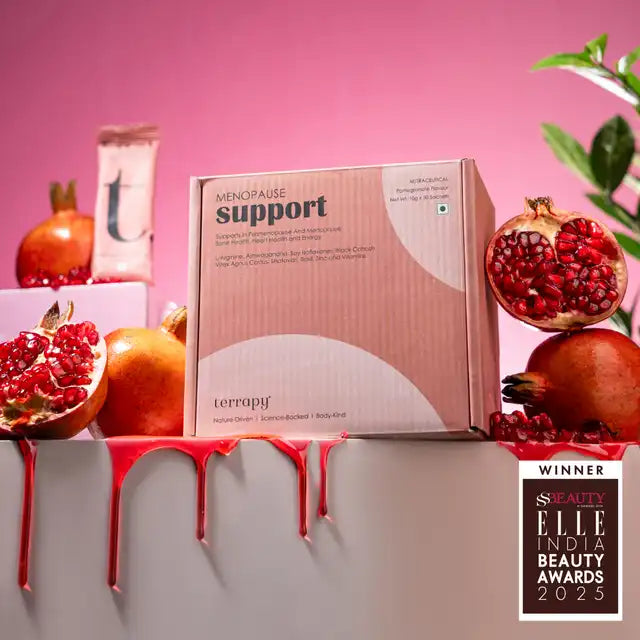
Terrapy's PCOS Comfort is designed to support hormonal balance, insulin sensitivity, cycle health, and metabolic wellbeing.
Women experiencing fatigue, metabolism concerns, or thyroid-related symptoms may also benefit from Thyrovital, which supports thyroid function, energy production, metabolism, skin health, and cognitive wellbeing.
Can IVF Help During or After Perimenopause?
IVF During Perimenopause
Many women successfully undergo IVF during perimenopause.
Success rates depend on:
- Age
- Egg quality
- Ovarian reserve
- Overall health
Because egg quality declines with age, fertility specialists often recommend early evaluation for women considering pregnancy in their 40s.
IVF After Menopause
Once menopause has occurred, natural conception is no longer possible.
However, pregnancy may still be achievable through IVF using donor eggs.
In these cases:
- Eggs from a younger donor are fertilized.
- Hormones prepare the uterus.
- An embryo is transferred into the uterus.
Because the uterus can often still support pregnancy after menopause, donor egg IVF has allowed some postmenopausal women to become pregnant.
Supporting Your Body Through Fertility Changes
Whether you're hoping to conceive or simply support your health during perimenopause, lifestyle habits play an important role.
- Prioritize Protein - Protein supports hormone production, muscle maintenance, and metabolic health.
- Maintain Stable Blood Sugar - Insulin resistance can negatively impact reproductive hormones.
- Exercise Regularly - Strength training and moderate cardiovascular activity support hormone regulation and metabolic health.
- Improve Sleep Quality - Poor sleep can worsen hormonal imbalances and fertility-related challenges.
- Manage Stress - Chronic stress elevates cortisol levels, which can interfere with reproductive hormone balance.
Terrapy's Mind Calm is formulated to support stress resilience, emotional balance, mental clarity, and sleep quality-areas that become increasingly important during hormonal transitions.
Final Note
Perimenopause marks the beginning of declining fertility-but not the end of fertility.
As long as ovulation continues, pregnancy remains possible.
This is why women experiencing irregular periods should not assume they can no longer conceive.
Once menopause has officially occurred, natural pregnancy becomes extremely unlikely because ovulation has stopped. However, advances in reproductive medicine continue expanding possibilities for women who wish to explore parenthood later in life.
Most importantly, understanding your body's hormonal changes empowers you to make informed decisions about fertility, contraception, and overall well-being.
At Terrapy, we believe women deserve science-backed support through every hormonal transition-from fertility and reproductive wellness to menopause, sleep, stress management, and metabolic health.
FAQs: Pregnancy After Perimenopause
Can irregular periods still lead to pregnancy?
Yes. Irregular periods during perimenopause often indicate unpredictable ovulation rather than the complete absence of ovulation. As long as ovulation occurs occasionally, pregnancy remains possible.
At what age does fertility significantly decline?
Fertility gradually declines after age 30 and decreases more rapidly after age 35. By age 40, both egg quantity and egg quality have declined substantially.
Can you ovulate during perimenopause?
Yes. Ovulation becomes less predictable but often continues throughout perimenopause. This is why pregnancy remains possible.
How do you know if you are still fertile during perimenopause?
Regular or irregular menstrual cycles, hormone testing, signs of ovulation, and ovarian reserve assessments can provide clues about ongoing fertility.
Is pregnancy after 45 possible?
Yes. Although fertility declines significantly after age 45, natural pregnancy can still occur. Assisted reproductive technologies may also improve pregnancy chances.
Can you get pregnant naturally at 50?
Natural pregnancy at age 50 is rare but not impossible if ovulation continues. However, fertility rates are extremely low at this age.
Can perimenopause symptoms feel like pregnancy symptoms?
Yes. Symptoms such as fatigue, missed periods, breast tenderness, mood changes, and nausea can overlap between pregnancy and perimenopause.
Can IVF help women during or after perimenopause?
Yes. IVF may help women conceive during perimenopause, and donor egg IVF can allow some women to achieve pregnancy after menopause.
Does perimenopause reduce egg quality?
Yes. Egg quality naturally declines with age, increasing the risk of miscarriage and chromosomal abnormalities.
Can healthy lifestyle habits improve fertility during perimenopause?
Healthy lifestyle habits cannot stop reproductive aging, but they can support hormonal health, metabolic function, egg quality, and overall fertility potential.
What foods support reproductive health during perimenopause?
Protein-rich foods, leafy greens, legumes, berries, healthy fats, omega-3-rich fish, nuts, seeds, and antioxidant-rich fruits and vegetables support reproductive and hormonal health.