
What living with food intolerance taught me about dependence
One recent night, after coming home late from work, my husband tidied up the
house, set up the new microwave, and did laundry and a few dishes, so that I would
have it easier the next day. I had stayed in bed much of the day, reading and texting
with friends, and had gone out in the evening to run an errand and meet a friend: all
activities that made me feel like I was slacking off. The next morning, I got up late as
usual, and went into the kitchen to make breakfast, where I saw evidence of my
husband’s exertions.
For the last eight months, I haven’t had a job. But my husband continues to do his
share of the housework. We don’t have a schedule or count pennies. I do some
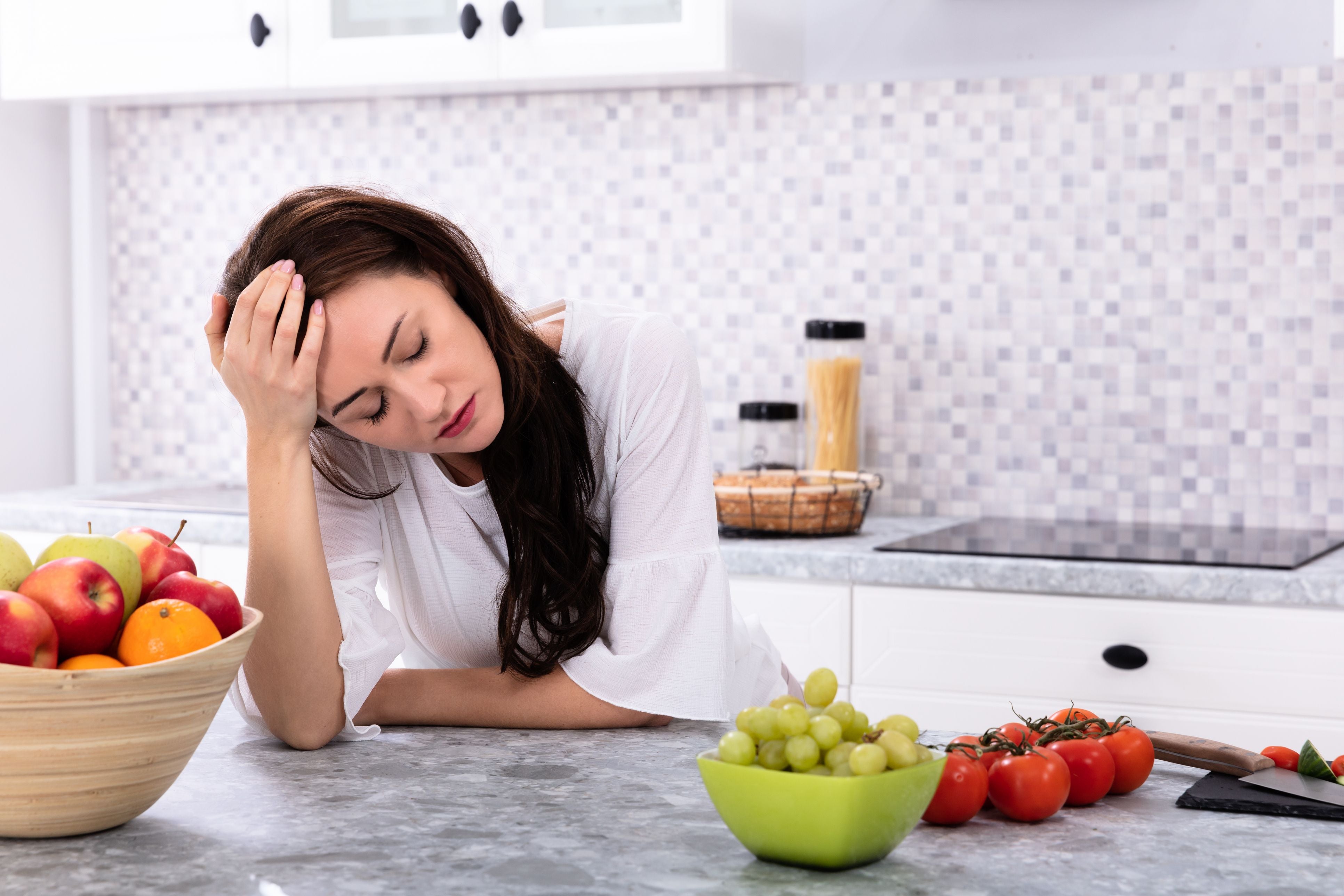
cooking and most of the laundry when I’m feeling well; when I’m not, I stay in bed
and become depressed and irritable, and he does his best to take care of me after
long days at work.
Guilt. Gratitude. These are two feelings I have about this arrangement. Neither of
which seems quite right for a romantic relationship, although I suppose they’re both
common enough.
Eight years ago, I was so sick — and admittedly, stressed out by an unpleasant
workplace — that I quit the job I was doing then. It took me a few more years to
figure out that I was intolerant to several common food ingredients: most importantly,
wheat and dairy. But at the time, all I knew was that I was often too unwell to get out
of bed. It also took me years of managing my diet (so that I am now much better) to
realise that certain foods have a direct effect on my emotional well-being, triggering
anxiety or depression, and often both.
I tried to do some freelance work, but I had no energy or motivation. For the first time
since I was 23, I was financially dependent on someone else. One day I snapped,
and accused my husband of resenting me for not earning. When I had calmed down
enough to listen, he pointed out that he had not indicated any resentment. I had
been projecting: I’d felt so resentful of my situation that I’d assumed he had too.
This guilt hit me on two levels. Women are constantly told that they have to be the
‘caring’, ‘nurturing’ partner. They are expected to take care of the people they love,
and not only in sickness. It’s a sexist double standard, but it’s one that we’re all
socialised into. It is a picture that offered me some semblance of control, of purpose.
But instead, I was the one in bed or on the sofa, feeling frustrated by this unnamed
lethargy that I could only name — and curse — as laziness.
My feminist guilt hit harder, although my feminism at the time was rudimentary,
rooted in quixotic notions of gender equality and female strength. I had vowed I
wouldn’t make the same mistake as my mother, whose husband — my father —
refused to let her work and then treated her with contempt for her lack of income.
And then I became dependent, financially and physically and emotionally, on a man.
The financial dependence was hardest to swallow.
The guilt increases because I know most women have to do so much more work
than the men they live with, and my partner willingly does more than his share. We
joke sometimes that I’m the husband, though a nice, modern one who doesn’t mind
the wife coming home late from work. But while this joke makes me feel better —
we’re laughing at gender roles that don’t apply to our situation — it doesn’t work
when I’m out of a job. Isn’t the husband supposed to at least earn?
Description: Two figures, with their backs to us, are embracing each other. They are
surrounded by circles of warm light and colour. Credit: Alia Sinha.
Just as feminism seemed to condemn me, it has also saved me. I now have friends
who are feminist and who join me in questioning these assumptions, whose love
saves me from feeling worthless. I have a therapist who points out the guilt I carry
and asks me to love myself when I don’t know how.
This year, without a full-time job to go to, I’ve spent much more time with friends. I’ve
spent hours working next to one friend or another so we would both have company;
I’ve spent days and weeks in friends’ homes, melding my life into theirs. And I have
been amazed, over and over again, by the kindness I have encountered.
Being unwell is a part of my life: each time I eat something that my body rejects, I
have to wait for days, sometimes weeks, to feel better again. I am used to being
taken care of by my husband: it’s relatively new to have friends look after me when
I’m unwell, physically or emotionally. To be fed when I feel incapable of feeding
myself, to be comforted when I am in tears, and to be reminded over and over again
that I am loved and not alone.
And I realise how _rewarding_ it can be to allow yourself to be dependent and
vulnerable in some ways, as long as it’s with the right people. I had spent so much of
my life protecting myself from people who would exploit my vulnerabilities to hurt me
that I had almost forgotten that this is a necessary part of any relationship. That what
we do for those we love doesn’t have to be equal or similar to what they do for us,
that accepting a friend’s help can be as much a gesture of love as offering it.
My ‘family’ of partner and friends consists of people with varying degrees of ability,
and while this might limit our capacity to actively care for each other in some ways, it
also expands our understanding of each other, and perhaps makes us
more _effective_ in our care.
One of the reasons these friends make up my family — the people who are closest
to me, the people I let myself be seen by with all my flaws and vulnerabilities — is
that they are full of empathy. And some of that empathy comes from having various
issues to deal with of their own, and learning that everyone, _every body_, has different
needs and paces. Even for my more able friends, having awareness and empathy is
key to their capacity for love.
For instance, one of my best friends lives with chronic pain and sometimes cancels
on our dates. But even though we can’t meet every week, her affection (often in the
form of emojis and gentle mockery of my self-doubt), her willingness to be honest
and available and vulnerable, her insistence on demanding more from the world,
make my days immensely richer. And it strikes me (even though my husband has
pointed this out to me a hundred times, but some truths you only believe when you
arrive at them on your own) that this is similar to what I do for my husband.
Therapy has helped me learn to give myself credit for what I do. So I ask my
husband, yet once again, what I do for him. This is what he says: You don’t accept
the world as it is. You expect more from yourself — which gives me the courage to
keep working to be better. You kept showing me that relationships are important and
need our time and attention, by planning vacations or dates, by reminding me to do
something nice for my parents and siblings.
I remind him that I don’t do that last any more. And then I realise that’s also part of
being a good partner: drawing a line and saying I’ve done enough, you need to step
up.
So I finally admit, we take care of each other. When I’m unwell, which is typically
several days of the month, he willingly takes up the bulk of the cooking and laundry
and anything else that needs doing — we are also lucky and immensely privileged to
have a wonderful domestic worker who does most of the cleaning.
Most importantly, he is kind and gentle — always, but even more so during those
days. I spend much time reading or watching TV, partly because some days, that’s
all I have energy for, and I point him to things he might like. I continue to try to be a
good partner (even though on some days I fail), which is exactly what he does for
me.
What I do for him and for our relationship is not less important than what he does for
us. Dependence is too messy to measure.
The answer perhaps lies in something I’ve learned from the disability rights
movement as well as feminism: anyone who thinks they are independent is kidding
themselves. What we need is more circles of mutual dependence, where we can
lean on each other in different ways. We need communities and families that we
build based on our needs and interests and the love we find as adults.