Terrapy Home
Common Name
,
Green tea, unfermented tea, sencha, matcha, gyokuro
Family
Theaceae
Parts Used
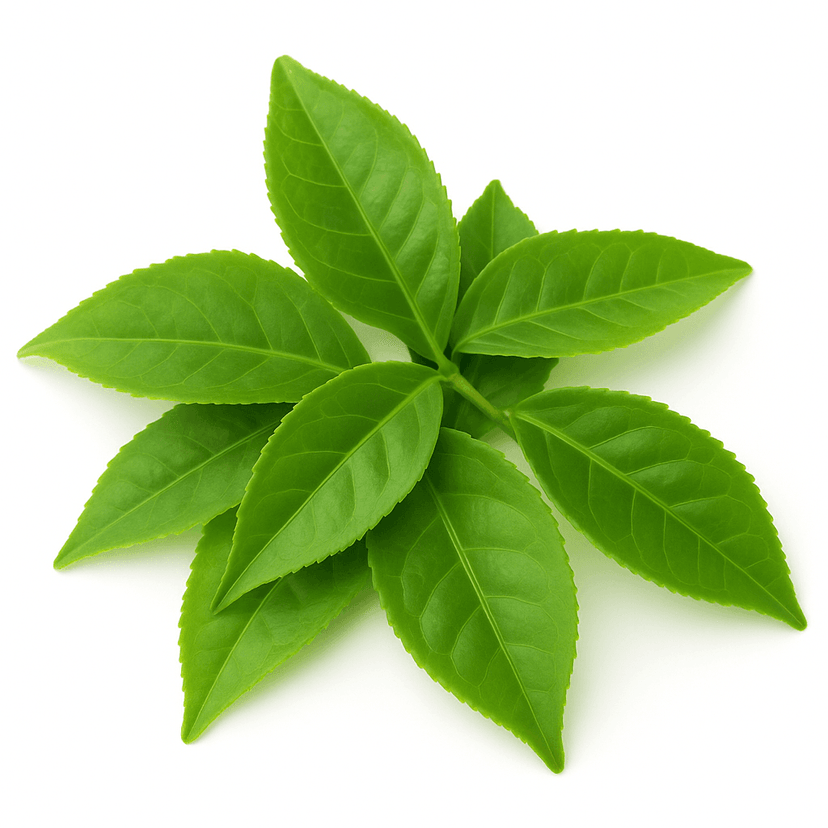
Young leaves and leaf buds
Native To
Indigenous to East Asia (China), now cultivated widely in Japan, India, Sri Lanka, Taiwan, Kenya and elsewhere.
Historical and Traditional Uses:
Consumed for >2,000 years in China and Japan for alertness, digestive comfort, and general vitality. In Traditional Chinese Medicine, green tea is “cooling,” used to “clear heat” and support mental clarity; in Japan, daily use is part of cultural tea ceremony practices.
Chemical Composition:
- Polyphenols (catechins): (typically 15–30% of dry leaf) epigallocatechin gallate (EGCG; major), epigallocatechin (EGC), epicatechin gallate (ECG), epicatechin (EC).
- Methylxanthines: caffeine (≈20–45 mg per 240 mL brewed cup; matcha higher), theobromine, theophylline.
- Amino acids: L-theanine (relaxing, attention-modulating).
- Minor constituents: flavonols (quercetin, kaempferol), minerals (K, Mn, F), volatile aromatics.
Pharmacological Properties:
- Antioxidant/Redox-active: Catechins scavenge radicals and up-regulate endogenous antioxidant enzymes (e.g., Nrf2-linked pathways).
- Metabolic & cardiometabolic: Mild inhibition of lipid absorption; effects on LDL oxidation; small thermogenic effect (caffeine + catechins).
- Neurocognitive: Caffeine improves vigilance; L-theanine may smooth stimulant effects (attenuates jitter, promotes relaxed attention).
- Vasoactive: Modest improvements in endothelial function and blood pressure in some trials.
- Antimicrobial/anti-adhesive: In vitro activity against oral pathogens; supports oral health.
Evidence-Based Uses and Benefits:
- Cardiometabolic risk markers (LDL-C, BP): Small but statistically significant improvements in LDL-cholesterol and systolic BP have been reported across RCTs of green-tea catechins/EGCG; effects are modest and hinge on dose, caffeine co-ingestion, and baseline status.
- Weight management: Cochrane review of RCTs found minimal to no clinically meaningful effect of green-tea preparations on weight loss/maintenance in overweight/obese adults. Use primarily for general wellness, not as a stand-alone slimming aid.
- Liver safety signal at high EGCG doses: Benefit–risk is favorable for brewed tea; concentrated extracts at high daily EGCG (≥800 mg/day, especially fasting) raise the risk of liver enzyme elevations/rare hepatotoxicity.
- Drug interaction potential: Green tea polyphenols can reduce the oral bioavailability of some drugs via transporter inhibition (notably OATP2B1) e.g., decreased exposure to the beta-blocker nadolol shown in clinical research and may antagonize non-heme iron absorption with meals.
- Bottom line: Best-supported outcomes are small improvements in cardiometabolic markers and general alertness/attention (caffeine ± theanine). Weight-loss effects are minor.
Dosage Guidelines:
- Brewed green tea: 2–4 cups/day (≈400–800 mL) is a common evidence-based intake for general wellness (provides roughly 100–300 mg EGCG/day depending on leaf, brew time, and variety).
- Standardized extracts: Common label doses deliver 150–300 mg EGCG once or twice daily, with food. Avoid fasting use and avoid ≥800 mg/day EGCG, aligning with EFSA safety advice. Stop if you develop signs of liver distress (fatigue, dark urine, jaundice).
Counter-Indications:
- Pre-existing liver disease or previous green-tea-extract–related liver enzyme elevations. Iron-deficiency anemia (tea with iron-rich meals can reduce non-heme iron absorption; separate by 1–2 hours).
- Pregnancy & lactation: Moderate brewed tea is generally considered compatible; avoid high-dose extracts given limited safety data and hepatotoxicity signal at high EGCG doses. Caffeine sensitivity, arrhythmias, uncontrolled hypertension, or anxiety disorders (prefer decaffeinated green tea or lower-caffeine varieties)
Side Effects:
- Common (dose-related, usually mild): GI upset, nausea (more likely with extracts/empty stomach), nervousness/insomnia/palpitations (caffeine).
- Less common/serious: Liver enzyme elevations and rare clinically apparent hepatotoxicity linked to high-dose extracts; typically reversible after discontinuation. Dental: Enamel staining possible with heavy intake (cosmetic)
Research and White Papers with Links:
1. Green-tea catechins: safety and liver considerations; advises avoiding ≥800 mg/day EGCG, especially fasting. (EFSA summary). https://pmc.ncbi.nlm.nih.gov/articles/PMC7009618/
2. Evaluation of liver-related safety of green tea extracts used in dietary supplements. https://pmc.ncbi.nlm.nih.gov/articles/PMC5193539/
3. RCT synthesis shows little to no clinically meaningful effect on weight. https://pmc.ncbi.nlm.nih.gov/articles/PMC7116866/
4. Polyphenol-rich teas inhibit non-heme iron absorption in humans. https://pmc.ncbi.nlm.nih.gov/articles/PMC6804354/
5. Tea Overview of efficacy, safety, and interaction considerations for tea, including green tea. https://pmc.ncbi.nlm.nih.gov/articles/PMC9370301/
Conclusions:
Green tea (Camellia sinensis) is a polyphenol-rich beverage with modest, supportive effects on cardiometabolic markers and attention, best used as part of a healthy lifestyle. Brewed tea is generally safe; however, concentrated extracts require care — take with food, avoid high daily EGCG doses (≥800 mg), and stop if liver-related symptoms occur. Be mindful of potential drug interactions (notably with nadolol and iron supplements) and caffeine sensitivity.