Terrapy Home

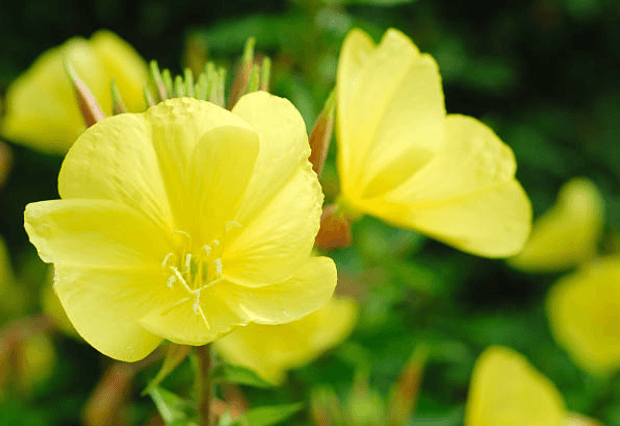
Common Name
Evening primrose, EPO (evening primrose oil) Family: Onagraceae
Family
Onagraceae
Parts Used
Seeds (cold-pressed oil or softgels); occasionally whole aerial parts in traditional use
Native To
Native to North America; naturalized/cultivated in Europe and parts of Asia
Historical and Traditional Uses:
Seeds and aerial parts were used by Indigenous peoples for minor skin issues and general tonic purposes; modern use centers on seed oil as a source of γ-linolenic acid (GLA) for skin conditions, cyclical breast pain (mastalgia), and gynecologic complaints
Chemical Composition:
- Fatty acids (principal actives): Linoleic acid (LA) ~65–85% and γ-linolenic acid (GLA) ~7–14% of oil; oleic 5–12%, palmitic 4–10%, stearic 1–4%. Trace α-linolenic acid. Tocopherols and phytosterols present.
- Quality considerations: High-PUFA oil is prone to oxidation—requires antioxidant protection and cool, dark storage.
Pharmacological Properties:
- Anti-inflammatory/antioxidant signals: Narrative and systematic reviews describe reductions in inflammatory mediators across small trials in heterogeneous conditions; clinical translation is condition-specific.
Evidence-Based Uses and Benefits:
- Atopic dermatitis (eczema) oral EPO:
- High-quality evidence does not support benefit. The Cochrane review (27 trials; EPO & borage oil) found no clinically meaningful improvement in global eczema symptoms vs placebo.
- Cyclical mastalgia (breast pain) oral EPO:
- A 2021 meta-analysis of 13 RCTs (n≈1,752) concluded EPO was no better than placebo, vitamin E, danazol, or topical NSAIDs for pain relief; safety similar to comparators.
- Cervical ripening / labor initiation (oral or vaginal EPO):
- Systematic reviews/meta-analyses report inconsistent and low-certainty results; use for induction/ripening remains unproven and not standard of care.
Other proposed uses (PMS, rheumatoid arthritis, diabetic neuropathy, menopause symptoms): evidence is insufficient or mixed; major authorities state there’s not enough evidence to support EPO for any health condition at this time
Counter Indications:
- Pregnancy: Avoid medicinal use for induction/ripening outside clinical trials; data are inconsistent and potential for adverse obstetric effects is uncertain.
- Bleeding risk / planned surgery: Because PUFAs may affect platelet function, many clinicians advise discontinuing high-dose EPO 1–2 weeks pre-op as a precaution. (Precaution echoed in clinical handouts.)
- Seizure disorders / concurrent phenothiazines: Early case reports raised a possible seizure-threshold concern when EPO was combined with phenothiazine antipsychotics; later analyses consider the association unconvincing, but caution is still commonly advised in people with epilepsy or on phenothiazines
Side Effects:
- GI: dyspepsia, soft stools/diarrhea, nausea.
- Other: headache or transient dizziness; rare allergic reactions. Overall, EPO is generally well tolerated in adults at studied doses.
Drug Interactions:
- Phenothiazines (e.g., fluphenazine, chlorpromazine): historic reports of seizures when combined with GLA-rich oils; although causal link is debated, avoid or monitor in consultation with prescriber.
- Anticoagulants/antiplatelets: theoretical additive bleeding risk at higher doses—exercise caution around procedures and with multiple agents.
- General: NCCIH advises discussing EPO with clinicians for any medication regimen; large authoritative review notes insufficient evidence of efficacy overall
Research and White Paper Links:
- Anti-inflammatory: https://pmc.ncbi.nlm.nih.gov/articles/PMC10867995/
- PMS pain: https://pmc.ncbi.nlm.nih.gov/articles/PMC6718646/
Conclusions:
Evening primrose oil is a GLA-rich seed oil with a clear biochemical rationale (series-1 eicosanoid support), but modern clinical evidence is limited:
Eczema: no meaningful benefit vs placebo in pooled analyses.
Mastalgia: no better than placebo or standard options in meta-analysis.
Cervical ripening/other indications: inconclusive.
EPO is generally well tolerated, but use prudently in those with seizure disorders (especially if taking phenothiazines) and around surgery/with anticoagulants. Where used, ensure quality-controlled, low-oxidation oil and conservative labeling aligned with the evidence base