Terrapy Home

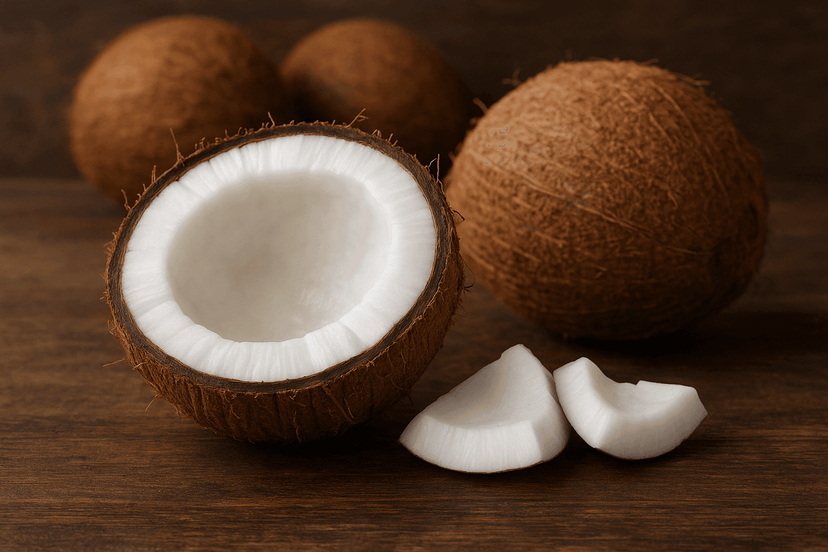
Common Name
Coconut, coconut palm
Family
Arecaceae (palm family)
Parts Used
Fruit (endosperm: “meat” & milk; liquid endosperm: coconut water); oil from dried kernel (copra); shell, husk, inflorescence sap used traditionally
Native To
Likely Indo-Malaya/Central Indo-Pacific; now pantropical along coasts and lowland tropics. Encyclopedia Britannica
Historical and Traditional Uses:
Staple food and culinary fat; coconut water as a refreshing beverage and folk rehydration drink; oil and cream in skin/hair care; wood/fiber for materials.
Chemical Composition:
- Coconut oil (copra/“virgin” oil): ~90–94% saturated fat. Major fatty acids: lauric (≈45–53%), myristic (~19%), palmitic (~9%); smaller caprylic/capric and unsaturated fats.
- Coconut water (per ~240 mL): ~9 g carbs, ~45 kcal, high potassium (~600 mg), modest sodium/magnesium; tiny protein/fat. (Exact values vary by maturity/brand.)
- Coconut meat/milk: fat rich endosperm with saturated triglycerides; milk/cream add water-soluble sugars and some micronutrients.
Pharmacological Properties:
- Oil (lauric-rich saturated fat): raises total and LDL cholesterol vs. unsaturated oils; can also raise HDL net atherogenic effect judged unfavorable by cardiology bodies.
- Coconut water: provides electrolytes (notably K⁺); supports rehydration similarly to sports drinks in small exercise trials; sodium may be lower than in standard ORS.
Evidence-Based Uses and Benefits:
- Hydration after exercise/heat: Small trials show coconut water hydrates about as well as water/sports drinks after moderate dehydration; performance differences are minimal. Use preference- and tolerance-based.
- Culinary/emollient uses: Traditional topical use of coconut oil for skin/hair is common; clinical evidence is limited but it functions as an occlusive moisturizer. (Not typically studied like medical emollients.)
- Cardiometabolic outcomes: Controlled trials and advisories show coconut oil raises LDL compared with cis-unsaturated oils; replacement with olive/canola/other unsaturated fats is favored for heart health.
- Not supported: Using coconut oil for weight loss or cardioprotection has insufficient or conflicting evidence; any HDL rise does not offset LDL increases in outcome guidance.
Counter Indications:
- Chronic kidney disease, hyperkalemia risk, ACE-I/ARB or K-sparing diuretics: Limit/avoid large volumes of coconut water due to potassium load. Severe hyperkalemia (including arrhythmia/syncope) has been reported after excess intake.
- Atherosclerotic CVD/dyslipidemia: Regular use of coconut oil as primary fat is not recommended; choose unsaturated fats.
- Infants with dehydration/diarrhea: Use WHO low osmolarity ORS coconut water lacks standardized sodium/glucose profile for acute pediatric rehydration.
Side Effects:
- Coconut water (excess): GI upset; hyperkalemia in susceptible individuals or after very high volumes.
- Coconut oil: Calorie-dense; can worsen LDL-cholesterol vs. replacing fats with unsaturated oils.
- Allergy: Coconut is a drupe (not a tree nut); true coconut allergy exists but is uncommon tree nut allergy does not automatically imply coconut allergy (manage per allergist guidance).
Drug Interactions:
- Potassium raising combinations: Coconut water + ACE-I/ARB, spironolactone, eplerenone, trimethoprim additive hyperkalemia risk; monitor or avoid large volumes.
- Lipid-lowering therapy: No direct interaction, but dietary counseling typically advises replacing coconut oil with unsaturated fats alongside statins per lipid guidelines.
Research and White Papers with Links:
1. Fatty-acid profile: https://pmc.ncbi.nlm.nih.gov/articles/PMC7766932/
2.Lauric acid in coconut oil: https://pmc.ncbi.nlm.nih.gov/articles/PMC11260118/
3.Cardiology guidance: https://pmc.ncbi.nlm.nih.gov/articles/PMC10182109/
4.Coconut water nutrition: https://pmc.ncbi.nlm.nih.gov/articles/PMC12072132/
5.Hydration studies summary: https://pmc.ncbi.nlm.nih.gov/articles/PMC3293068/
Conclusions:
Coconut is a versatile crop: water can be a pleasant hydration beverage rich in potassium; oil is predominantly saturated fat (lauric-rich) that raises LDL vs. unsaturated oils so it’s best used sparingly if at all for cardiometabolic health. Coconut water is fine for casual hydration but is not a substitute for ORS in pediatric diarrhea and can be unsafe in large volumes for people prone to hyperkalemia. For long-term heart health, prioritize unsaturated oils and use coconut products in moderation and in the right context.